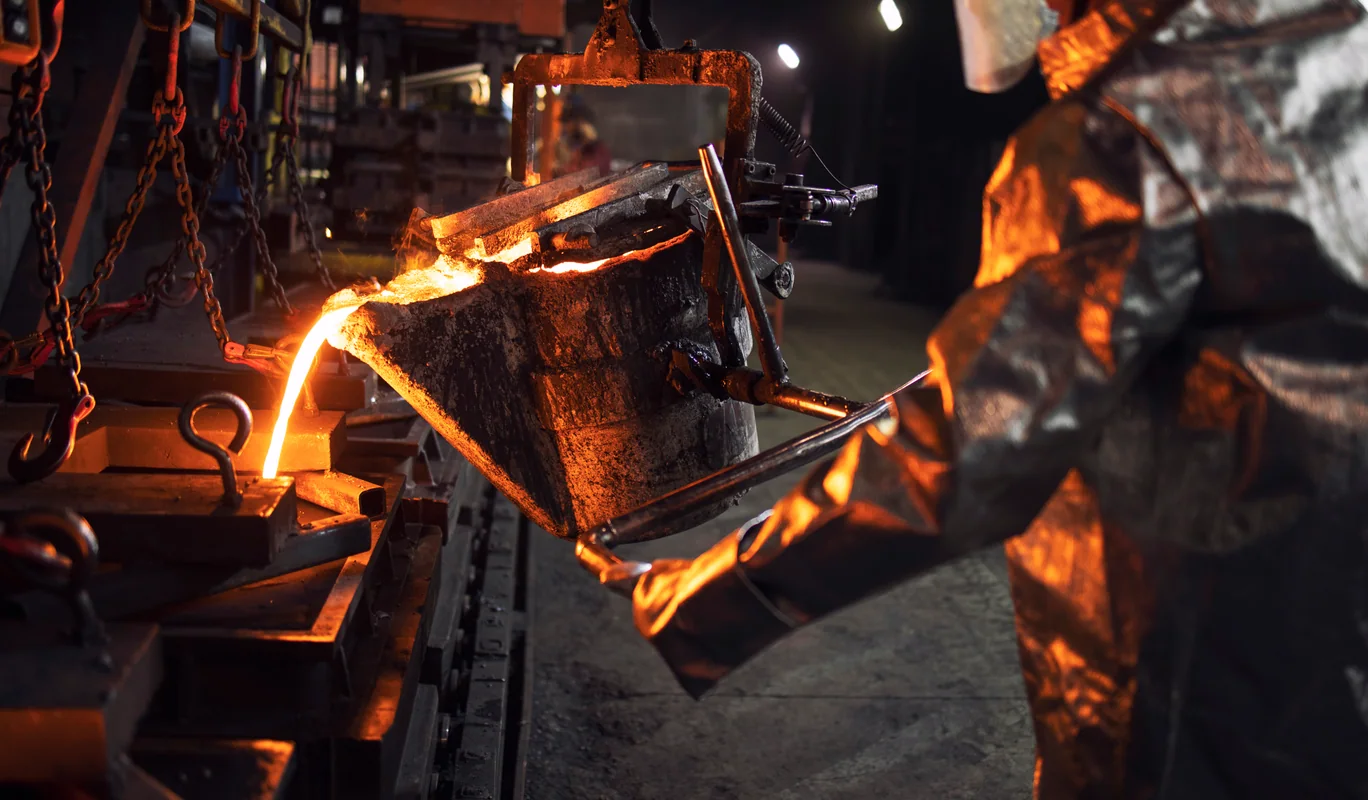
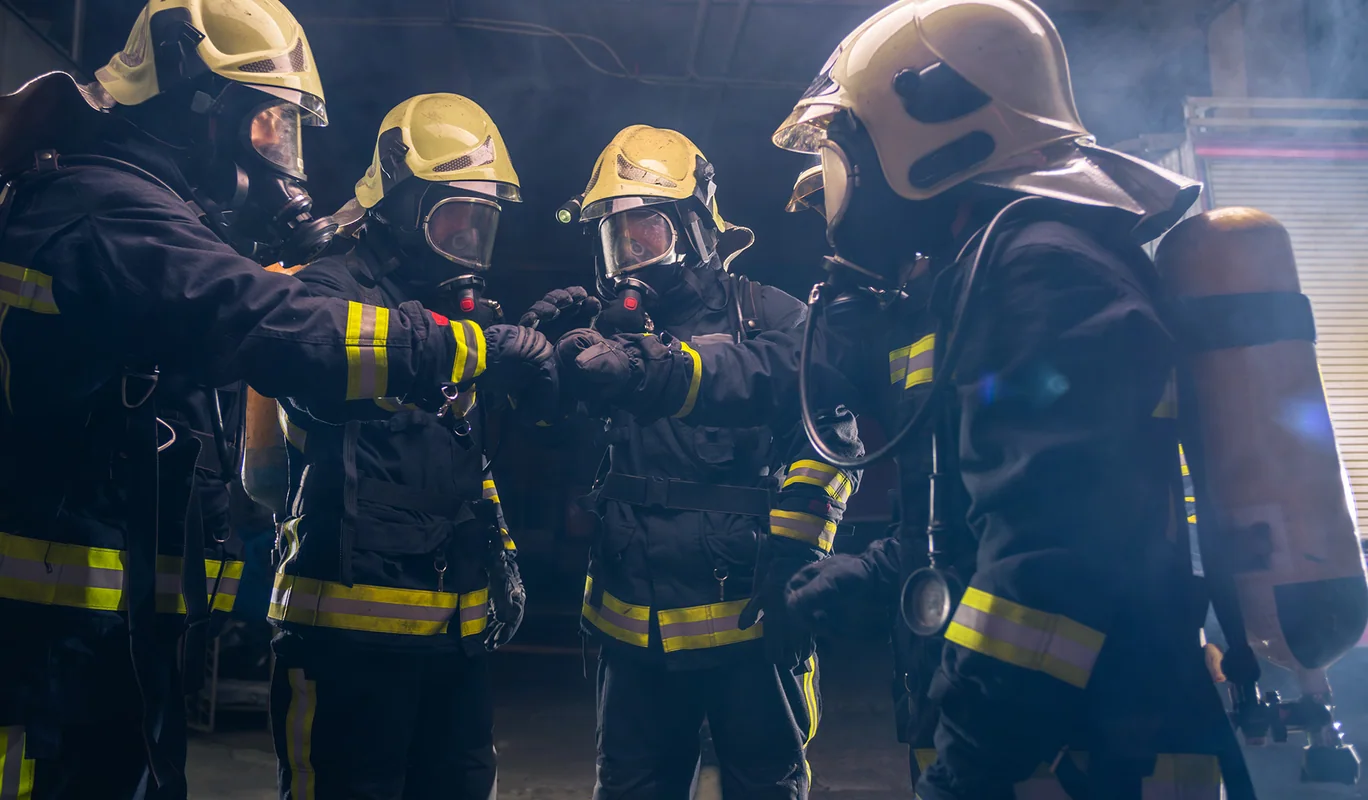
Zinc splashes pose serious risks because of zinc's high viscosity and strong adhesion. Fabrics must combine thermal insulation with excellent splash resistance.
Risks and safety standards for protective fabrics in zinc foundries
With a melting point of around 780°F, molten zinc becomes highly viscous, even more so than aluminum. This makes it one of the most difficult molten metals to protect against because it tends to adhere strongly to many fabrics.
Zinc and its alloys present a high adhesion risk that can lead to burns if splashes contact protective garments. Although heat transfer to the skin is lower than with aluminum, the danger remains significant because of zinc's sticking behavior.
Molten metal splashes
Molten metal splashes are a critical foundry hazard. Smelting, pouring, and casting involve liquid metals at extreme temperatures, and even a small splash can cause severe burns or ignite ordinary clothing.
Protective fabrics must be engineered to shed molten metal rather than allow it to adhere. High thermal insulation is also essential to reduce heat transfer to the skin and limit the severity of injuries.
Welding environments expose workers to sparks, molten-metal spatter, slag, and intense UV and infrared radiant heat. These hazards can ignite ordinary workwear and cause severe burns during even short operations.
Protective clothing must be flame-resistant, repel fast molten-metal splashes, minimize heat transfer, and maintain its performance after repeated use while providing full coverage in high-exposure areas.
An arc flash releases intense thermal energy when electrical current passes through air. An arc event may also produce pressure, sound and projectiles, which must be considered separately from the thermal performance of clothing.
Arc ratings are laboratory results for a material or tested material assembly, expressed in cal/cm². They support PPE selection for the assessed task exposure; they do not guarantee freedom from burns or establish protection against electric shock or pressure waves.